War Without Authority: What the Iran Conflict Reveals About Global Power
MACROECONOMIC
Yannis Douto-Ioannides
5/27/20262 min read
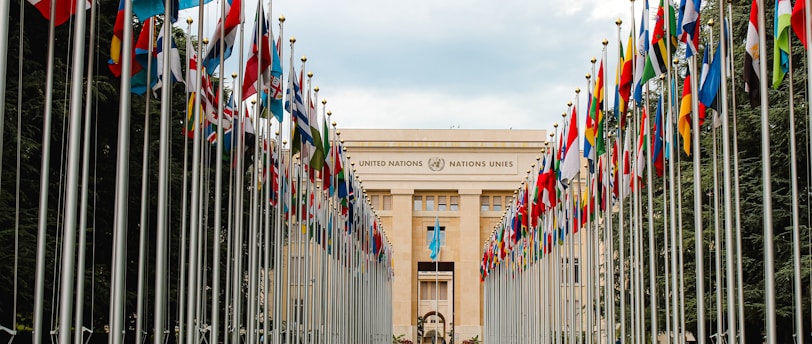

The recent escalation involving Iran is not just a regional crisis, but a reflection of bigger changes in how global power operates. Military action has taken place with limited international consensus and unclear legal authority, raising questions about the role of international law and the structure of the global order. Rather than an isolated event, the conflict highlights a shift towards a more fragmented and unpredictable system.
One of the most significant issues is the weakening of legal frameworks that traditionally governed the use of force. Institutions such as the United Nations Security Council have played a less central role, with major powers acting more independently (Bellamy, 2015). This suggests that the rules surrounding intervention are becoming less consistent, making it harder to distinguish between legitimate security actions and strategic power projection.
At the same time, the conflict reflects broader changes in global power dynamics. While the United States remains militarily dominant, its ability to build international consensus appears more limited. Allies have shown caution rather than full alignment, indicating a move towards a more multipolar system in which states pursue their own interests more independently (Mearsheimer, 2019). This weakens the idea of a stable, rules-based international order.
The economic impact of the conflict also demonstrates how modern warfare extends beyond traditional battlefields. Concerns over disruptions to the Strait of Hormuz, a key global energy route, have contributed to rising oil prices and wider economic uncertainty (IEA, 2024). This shows how geopolitical tensions can directly affect domestic economies, linking foreign policy decisions to everyday life.
However, the conflict also exposes the limits of military power. While force can achieve short-term objectives, it rarely resolves underlying political tensions. Without a clear long-term strategy, interventions risk prolonging political and economic instability rather than containing it (Freedman, 2013). This raises important questions about whether traditional security approaches remain effective.
Overall, the Iran conflict reflects a broader transformation in international politics. The erosion of clear rules and the rise of more distributed power suggest that the global system is becoming less predictable. The key issue is not just who holds power, but how it is used. Without stronger frameworks and cooperation, the risk is that conflicts become more frequent and harder to manage.
References
Bellamy, A. (2015). The Responsibility to Protect: A Defence. Oxford: Oxford University Press. Freedman, L. (2013). Strategy: A History. Oxford: Oxford University Press. IEA (2024) Oil Market Report. International Energy Agency. Mearsheimer, J. (2019). The Great Delusion: Liberal Dreams and International Realities. New Haven: Yale University Press.
Insights
Exploring political risk and financial market impacts. This is not financial advice.
Analysis
Trends
© 2025. All rights reserved.