
Is the United Nations Still Effective? Lessons from Recent Conflicts
MACROECONOMIC
Yannis Douto-Ioannides
1/25/20263 min read
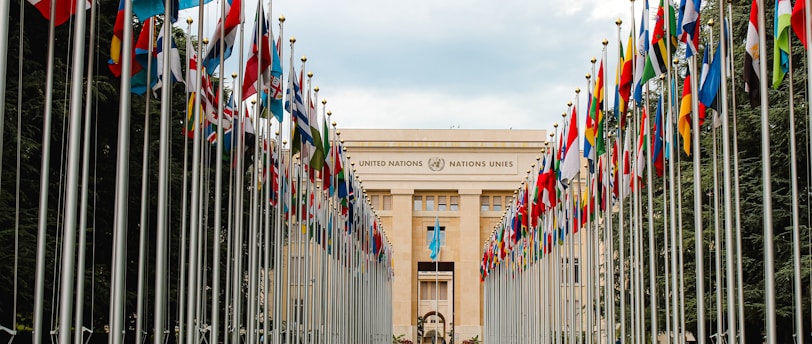

The United Nations was created to prevent war, protect civilians, and uphold international law. In recent years, however, a series of overlapping crises including the war in Ukraine, violence in Gaza, civil war in Sudan, and long-running instability in Somalia and the Democratic Republic of Congo have reignited debate over whether the UN remains an effective international organisation. While critics argue that the UN has become little more than a forum for statements and resolutions, others maintain that its value lies in more limited but essential functions.
Assessing the UN’s effectiveness therefore requires examining where it has failed, where it has succeeded, and why outcomes vary so significantly across cases.
When the UN Falls Short: Ukraine and Great-Power Conflict
Ukraine represents one of the clearest recent examples of the UN’s limitations. Since Russia’s full-scale invasion of Ukraine in 2022, the UN General Assembly has passed multiple resolutions condemning the violation of Ukrainian sovereignty, with overwhelming majorities in support. These votes demonstrate that the UN can still mobilise broad international consensus.
However, the Security Council the body with authority to mandate enforcement action has been effectively paralysed. Russia’s status as a permanent member with veto power has blocked binding resolutions, sanctions, or peacekeeping mandates. This has exposed a structural weakness at the heart of the UN system: when a major power is directly involved in a conflict, the organisation lacks the means to act decisively.
Ukraine therefore illustrates a central critique of the UN. It is effective at articulating norms and condemnation, but largely ineffective at enforcement in conflicts involving powerful states.
Israel–Palestine: Norms Without Resolution
A similar pattern is evident in the Israel–Palestine conflict. Over decades, the UN has passed numerous resolutions affirming international law, civilian protection, and the need for a political settlement. In recent escalations in Gaza, emergency sessions of the General Assembly and Security Council have once again produced strong rhetoric but limited practical impact.
Vetoes in the Security Council particularly by the United States have constrained collective action on Gaza, reinforcing perceptions that international law is applied unevenly (Security Council voting history on Israel–Palestine). This case highlights how geopolitical alliances can undermine institutional authority, even when humanitarian costs are high.
Sudan and the Limits of Early Warning
Sudan offers another case where the UN’s effectiveness has been questioned. Prior to the outbreak of full-scale civil war in 2023, UN officials and humanitarian agencies warned of rising instability and the risk of mass violence. Despite this early warning, international response remained limited, and the conflict escalated rapidly.
The war has produced one of the world’s largest displacement crises, with millions forced from their homes. While UN agencies continue to deliver aid to civilians, the organisation’s inability to prevent the collapse of political order has raised concerns about the gap between warning and action. Sudan demonstrates that information and expertise alone are insufficient without political will and material support from member states.
Where the UN Still Matters: Somalia and the DRC
Despite these failures, there are cases where the UN continues to play a meaningful role. In Somalia, UN agencies coordinate humanitarian assistance, support state-building efforts, and work alongside regional actors to mitigate the impact of prolonged conflict. Although insecurity persists, the UN’s presence has contributed to preventing total institutional collapse and managing recurring humanitarian emergencies.
Similarly, in the Democratic Republic of Congo, the UN maintains one of its largest peacekeeping missions. While violence has not been eliminated, UN forces have provided civilian protection in certain areas and facilitated humanitarian access. These cases suggest that the UN can be effective at limiting harm, even when it cannot resolve underlying political conflicts.
Why Effectiveness Varies
Taken together, these cases reveal that UN effectiveness is highly conditional. Where major powers are divided or directly involved as in Ukraine or Gaza the organisation is constrained by veto politics and geopolitical rivalry. Where there is partial international consensus and a focus on humanitarian coordination as in Somalia or the DRC the UN retains practical relevance.
Funding also plays a critical role. Chronic underfunding of humanitarian appeals continues to limit the UN’s operational capacity, forcing agencies to prioritise some crises over others. This disconnects between political commitments and financial support further restricts effectiveness.
Conclusion: A Constrained but Necessary Institution
The UN is neither irrelevant nor fully capable of fulfilling its original ambitions. Recent conflicts show that it struggles to enforce peace, particularly in cases involving powerful states or entrenched geopolitical interests. At the same time, it remains indispensable for humanitarian coordination, norm-setting, and documenting violations of international law.
Rather than asking whether the UN is effective in absolute terms, a more useful question is: effective at what, and under what conditions?
The evidence suggests that while the UN cannot compel peace, it continues to shape global responses to conflict in ways that no other institution can fully replace. Its future relevance will depend less on rhetoric and more on whether member states are willing to align political will, resources, and cooperation with the principles the organisation was created to uphold.
Insights
Exploring political risk and financial market impacts. This is not financial advice.
Analysis
Trends
© 2025. All rights reserved.